


A full body workout at home without equipment is one of the most effective and convenient ways to stay fit. You don’t need a gym membership, fancy machines, or heavy weights. Instead, your body becomes your best tool.
This effective 20-minute routine is designed for real people with busy lives, whether you are a beginner, a busy professional in the US, a parent, or someone who travels often. No fancy gear, no expensive supplements, and no long hours required. Just 20 minutes, a small space in your living room or bedroom, and consistency.
In this complete guide, you will get everything you need: a step-by-step workout plan, exact form instructions, beginner modifications, progression tips, and answers to the most common questions. Thousands of Americans are already seeing great results with bodyweight training. Now it’s your turn.
Table of Contents
Benefits of a Full Body Workout at Home Without Equipment
A well-structured full body workout at home without equipment is one of the most efficient ways to improve your fitness. Here’s why it works so well:
- Builds lean muscle while burning fat: Compound movements engage multiple muscle groups at once, helping you build strength and boost your metabolism. This means you continue burning calories even after the workout ends.
- Saves serious time and money: You eliminate gym fees, travel time, and waiting for equipment. Many people waste over an hour just getting to and from the gym.
- Improves functional strength and posture: These exercises mimic real-life movements, making everyday tasks like lifting groceries, playing with kids, or climbing stairs easier.
- Enhances heart health and endurance: The circuit format keeps your heart rate elevated, combining strength and cardio in one session.
- Lowers injury risk: Bodyweight exercises help develop balanced strength and better joint stability compared to heavy lifting with poor form.
- Boosts mental health: Short, effective workouts release feel-good endorphins, reduce stress, and build discipline that carries over into other areas of life.
- Completely flexible: Do it at 6 AM before work, during lunch, or after the kids go to bed. It works in tiny apartments, hotel rooms, or even your backyard.
Research from the American College of Sports Medicine shows that consistent bodyweight resistance training can significantly improve muscle mass, strength, and body composition which often matching or exceeding traditional gym results for beginners and intermediate trainees.
What You Need to Get Started
The best part about this full body workout at home without equipment is how minimal the requirements are:
- Clear floor space
- Comfortable workout clothes and supportive sneakers (you can go barefoot on carpet)
- A yoga mat or towel for cushioning (optional but recommended for hard floors)
- A water bottle nearby
- Your phone or a timer
Important safety notes: Focus on proper form over speed or reps. If you are new to exercise, over 40, or have any health concerns (joint issues, high blood pressure, etc.), consult your doctor before starting. Start slow and build up gradually.
Quick 5-Minute Warm-Up Routine
Always begin with a warm-up to increase blood flow, loosen joints, and prepare your muscles. This short sequence takes only 5 minutes:
- Arm Circles – Stand tall, make big circles with your arms. 30 seconds forward, 30 seconds backward.
- Marching or Jumping Jacks – 60 seconds (use marching in place for low-impact).
- Bodyweight Squats – 10 slow and controlled reps, focusing on sitting back into your hips.
- Torso Twists – Feet shoulder-width, twist gently side to side for 60 seconds.
- High Knees or Marching – 60 seconds, driving knees up comfortably.

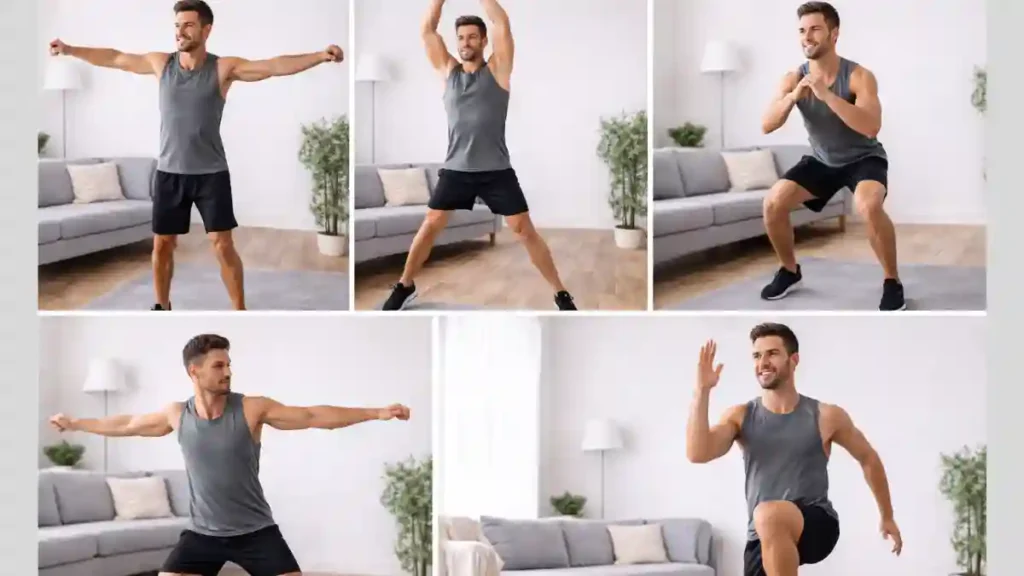
You should feel warmer and more mobile by the end. Now you’re ready for the main workout.
The Ultimate 20-Minute Full Body Workout at Home Without Equipment
This routine targets your legs, glutes, chest, back, shoulders, arms, and core in one powerful session.
How to perform the workout:
- Do each exercise for 45 seconds at a steady, controlled pace.
- Rest 15 seconds between exercises.
- Complete 3 to 4 full rounds.
- Rest 45-60 seconds between rounds if needed.
Total workout time: approximately 20 minutes. As you get stronger, you can increase to 50 to 60 seconds per exercise or add a fourth round.
Here are the 10 exercises with detailed instructions, targeted muscles, common mistakes, and modifications:
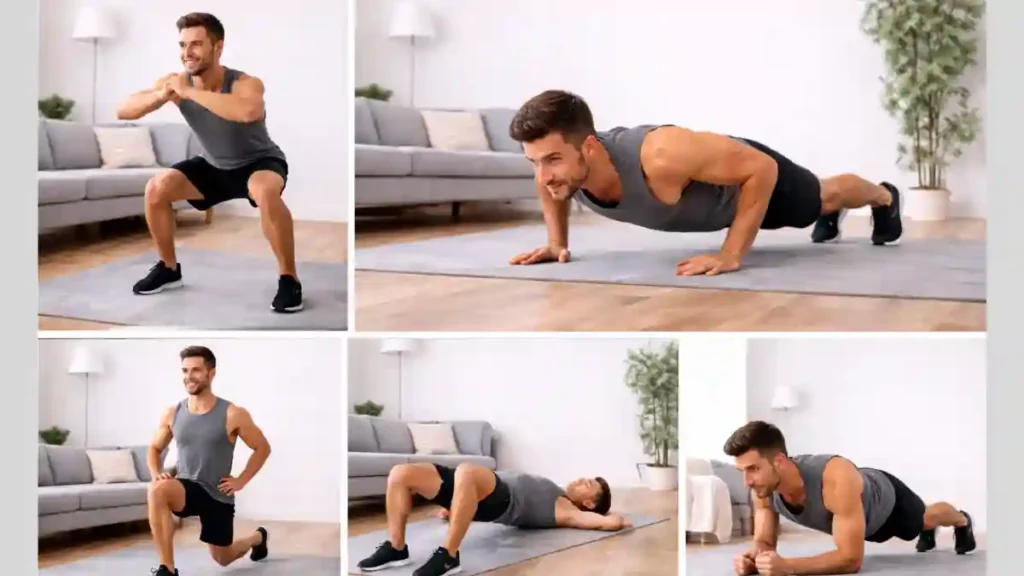
1. Bodyweight Squats: Stand with feet shoulder-width apart, toes slightly turned out. Push your hips back as if sitting in a chair, keeping chest up and knees tracking over toes. Drive through heels to stand.
Targets: Quads, glutes, hamstrings.
Common mistake: Letting knees cave inward.
Beginner: Smaller range of motion.
Advanced: Add a jump at the top (jump squats).
2. Push-Ups: Start in a high plank position, hands slightly wider than shoulders. Lower your chest toward the floor by bending your elbows, and then push back up. Keep body straight.
Targets: Chest, shoulders, triceps, core.
Beginner: Do from knees.
Advanced: Try diamond push-ups (hands close together).
3. Walking Lunges: Step forward into a lunge until both knees is at 90 degrees, then push off the front foot to step into the next lunge. Alternate legs.
Targets: Legs, glutes, balance and coordination.
Modification: Do stationary reverse lunges if space is limited.
4. Glute Bridges: Lie on your back, knees bent, feet flat on the floor. Lift hips toward the ceiling by squeezing glutes, pause at the top, then lower slowly.
Targets: Glutes, hamstrings, lower back.
Advanced: Do single-leg bridges.
5. Plank: Hold a forearm plank with elbows under shoulders, body in a straight line from head to heels. Tighten your core and glutes.
Targets: Entire core, shoulders, back.
Beginner: Drop to knees.
Advanced: Add alternating shoulder taps.
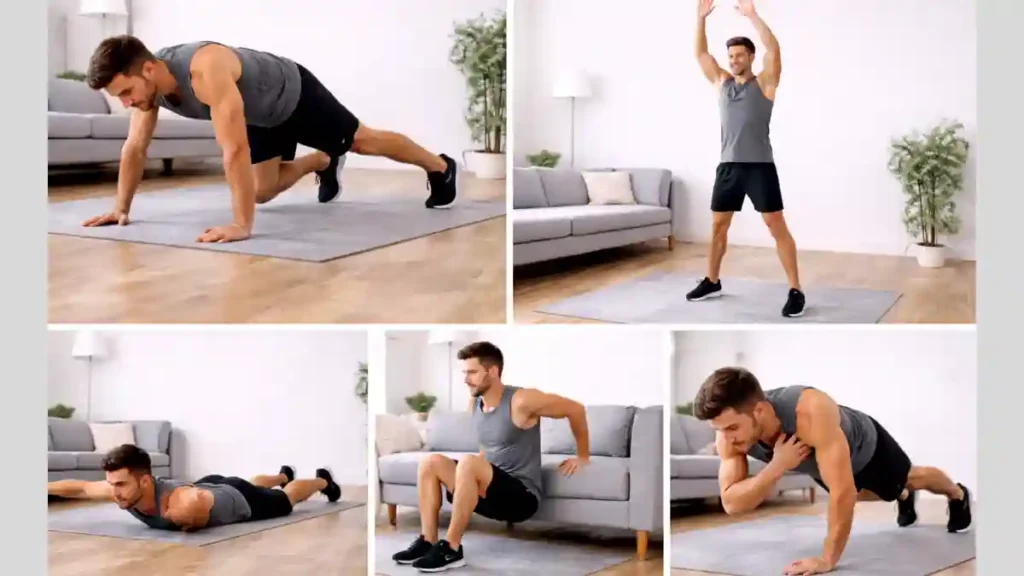
6. Mountain Climbers: In high plank position, quickly alternate driving one knee toward your chest while keeping hips low.
Targets: Core, shoulders, cardio endurance.
7. Burpees (Low-impact option included): Squat down, place hands on floor, step or jump feet back to plank, step or jump feet forward, then stand and reach arms overhead.
Targets: Full body and cardiovascular system.
Beginner: Step back and forward instead of jumping.
8. Superman: Lie face down, arms extended forward. Lift arms, chest, and legs off the floor simultaneously. Hold for 2 seconds, then lower.
Targets: Upper and lower back, rear shoulders, glutes.
9. Tricep Dips (Floor version): Sit on the floor with knees bent, hands behind you, fingers facing forward. Lift hips off floor, bend elbows to lower body, then press back up.
Targets: Triceps, shoulders, chest.
10. Shoulder-Tap Plank: In high plank, slowly tap left shoulder with right hand, then right shoulder with left hand. Keep hips as stable as possible.
Targets: Core, obliques, shoulders.
Pro tip: Breathe out during the hardest part of each movement (e.g., pushing up in push-ups or standing in squats).
Sample Weekly Schedule & How to Progress
Recommended schedule for steady results:
- Monday, Wednesday, Friday: Full 20-minute workout
- Tuesday/Thursday: 20–30 minute brisk walk or light yoga
- Saturday: Optional active recovery (stretching or mobility)
- Sunday: Full rest
Progression plan:
- Weeks 1–2: Master form with 3 rounds
- Weeks 3–4: Move to 4 rounds or increase work time to 50 seconds
- Weeks 5: Slow down the lowering phase (3–4 seconds) or add pauses at the bottom of movements
- Track your workouts in a notebook or phone app to stay motivated and see progress
Pair this with a slight calorie deficit and higher protein intake for fat loss, or eat in a surplus for muscle gain.
Common Mistakes to Avoid & Recovery Tips
Even the best full body workout at home without equipment can be less effective if you fall into these traps:
- Sacrificing form for speed
- Holding your breath instead of breathing steadily
- Skipping warm-up or cool-down
- Training the same muscles every day without rest
- Neglecting nutrition and sleep
Recovery essentials:
- Eat protein within 1–2 hours after training (eggs, Greek yogurt, chicken, fish, tofu, or lentils).
- Get 7–9 hours of quality sleep nightly.
- Stay hydrated throughout the day.
- Do light stretching or walking on rest days.
- Consider foam rolling or a quick 5-minute stretch routine.
Conclusion
You now have a complete, proven full body workout at home without equipment that delivers real results without any barriers. No gym, no equipment, no excuses, just 20 minutes of focused effort a few times a week.
Start today with your first session. Take before photos, track how you feel after two weeks, and watch your strength and confidence grow. Small daily actions lead to massive transformations over time.
Frequently Asked Questions
What is the best full body workout at home without equipment for beginners?
The 20-minute circuit in this article is ideal for beginners. Use the easier modifications like knee push-ups and stepping instead of jumping until you build confidence and strength.
How often should I do a full body workout at home without equipment?
3 to 4 times per week with at least one rest day between sessions is optimal. This allows your muscles enough time to recover and grow.
Can I build muscle with a full body workout at home without equipment?
Yes, definitely. By progressively increasing reps, slowing movements, or adding more rounds, you create enough resistance for muscle growth.
How long until I see results from a full body workout at home without equipment?
Most people notice improved strength and energy in 2–4 weeks. Visible changes in muscle tone and fat loss usually appear in 4–8 weeks with consistent training and good nutrition.
Is a full body workout at home without equipment effective for weight loss?
combines muscle-building strength work with heart-pumping cardio, which helps burn calories and raises your resting metabolism.
What if I have knee or back pain, can I still do this workout?
Many exercises can be modified. For example, replace lunges with glute bridges and do planks on your knees. Always consult your doctor before starting if you have ongoing pain.
Do I need any equipment at all for a full body workout at home?
No. Your body weight provides all the resistance you need. A yoga mat is the only optional item for comfort.
Can I do a full body workout at home without equipment every day?
It’s better not to. Daily intense training without rest can lead to overtraining, fatigue, or injury. Include rest or lighter activity days.
How many calories does a 20-minute full body workout at home without equipment burn?
On average, 200–350 calories per session, depending on your body weight, intensity level, and fitness
What should I eat before and after a full body workout at home without equipment?
Before: A light snack like banana with peanut butter or Greek yogurt 30–60 minutes prior. After: A meal with protein and carbs (e.g., eggs with toast, grilled chicken with rice and vegetables) within 1–2 hours.