The Best Home Workout for Beginners: Your No-Equipment Journey to Fitness in the USA
Introduction: The Best Home Workout for Beginners
Starting a fitness journey can feel overwhelming. Crowded gyms, expensive memberships, and too much equipment can make it hard to begin. But the best home workout for beginners only requires the items you already have at home.
I believe that getting fit shouldn’t require you to leave your home or spend a fortune. In this comprehensive guide, I will show you how to build strength, improve your health, and establish lasting exercise habits, all from the comfort and convenience of your own home. I am here to prove that you already possess everything you need to start your fitness transformation today.
Table of Contents
Why Choose Home Workouts (No Equipment)?
Choosing to work out at home, especially without equipment, offers various benefits that are especially convenient for beginners. We have found that this approach removes many of the common barriers that prevent people from starting an exercise routine.
Lower Barrier to Entry
One of the most significant advantages is the lower barrier to entry. There’s no commute time to entry and exit, no membership fees, and no requirement to wait for machines. If you have just 10-20 minutes and a small, clear space, you can start your workout. This simplicity removes most of the barriers that often prevent beginners from even starting their fitness journey.
Reduced Fear Factor
Many beginners feel hesitation regarding proper form in a gym setting or workout. A home workout alleviates this fear factor, allowing you to learn at your own pace without worrying about being judged. This private environment boosts confidence and provides a more focused learning experience.
Customizable Intensity
At home, you have complete control over the difficulty of your workouts. There is no pressure to lift heavier weights or keep up with more advanced exercises. You can adjust the intensity to suit your current fitness level and gradually increase it as you get stronger, ensuring a sustainable and enjoyable experience.
Time Savings
Working out at home saves a significant amount of time. There is no need to commute to a gym; you can begin a 20-minute workout almost immediately after getting out of bed. Research indicates that individuals who exercise at home tend to be more consistent and stick with their fitness routines for longer periods, compared to those who work out at a gym.
More Affordable Than the Gym
To be honest, gym memberships in the U.S. aren’t cheap. On average, people spend anywhere from $40 to $70 per month, and at premium gyms, that cost can be significantly higher. For those just starting out, this represents a substantial financial commitment, especially if they aren’t even sure whether they will be able to stick with it in the long run. This is precisely where equipment-free home workouts prove most beneficial, as they don’t cost you a single penny.
Additional Health Benefits
Beyond strength and convenience, bodyweight workouts performed at home offer other health benefits as well. By combining high-intensity activities with strength-building exercises, these workouts can prove effective for weight loss. Furthermore, the muscle contractions that occur during home workouts facilitate the uptake of glucose from the bloodstream into muscle cells, potentially leading to improvements in insulin sensitivity and glucose control in the body.
Your Essential No-Equipment Beginner Workout Routine
To maximize the benefits of your home workouts, it’s crucial to follow a structured routine that includes a warm-up, the main exercises, and a cool-down. We’ve selected some of the best home workouts for beginners, no equipment, that USA residents can easily incorporate into their daily lives.
Warm-Up (5-10 minutes)
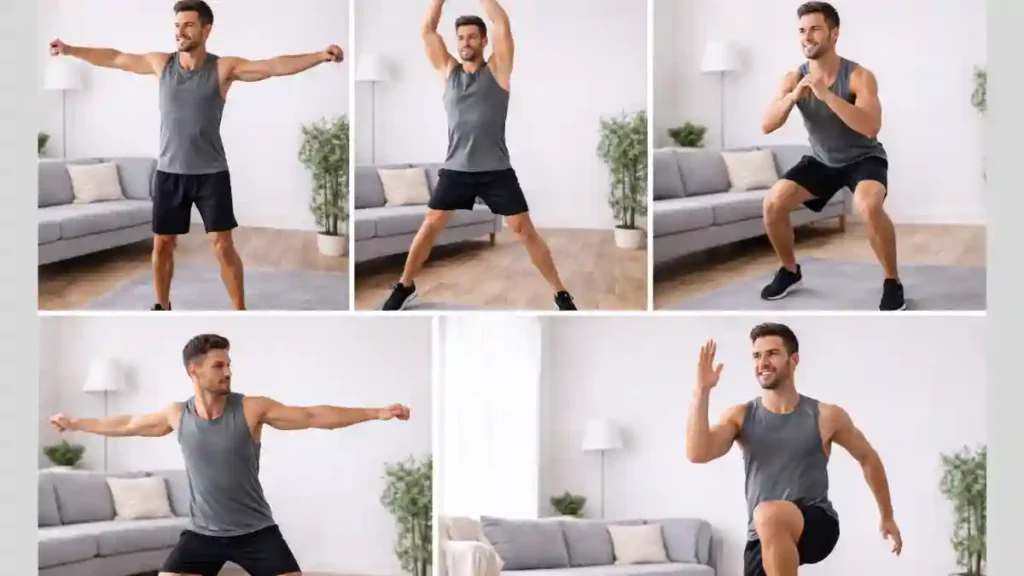
A proper warm-up prepares your muscles and joints for exercise, reducing the risk of injury and helping to improve performance. We recommend some dynamic stretches that help to circulate blood properly in your body.
- Marching or Jogging in Place: 2-3 minutes. Gently raise your knees and swing your arms to increase your heart rate.
- Arm Circles: 30 seconds forward, 30 seconds backward. Extend your arms to the sides and make small, then gradually larger circles.
- Leg Swings: 10-15 swings per leg, forward and backward. Hold onto a wall for balance if needed.
- Torso Twists: 30 seconds. Stand with feet shoulder-width apart, gently twisting your torso from side to side.
- Cat-Cow Stretch: 1 minute. On all fours, arch your back on an inhale and round it on an exhale to mobilize your spine.
Main Workout: Full-Body exercise (15-20 minutes)
For beginners, a full-body exercise is highly effective in targeting major muscle groups and enhancing overall fitness. We recommend that you perform each exercise for a set duration or number of repetitions, with a short period of rest in between. Aim for 2-3 rounds of the entire exercise. Focus on proper form over speed or the number of repetitions.
Lower Body Strength
These exercises are fundamental for building strong legs and glutes.
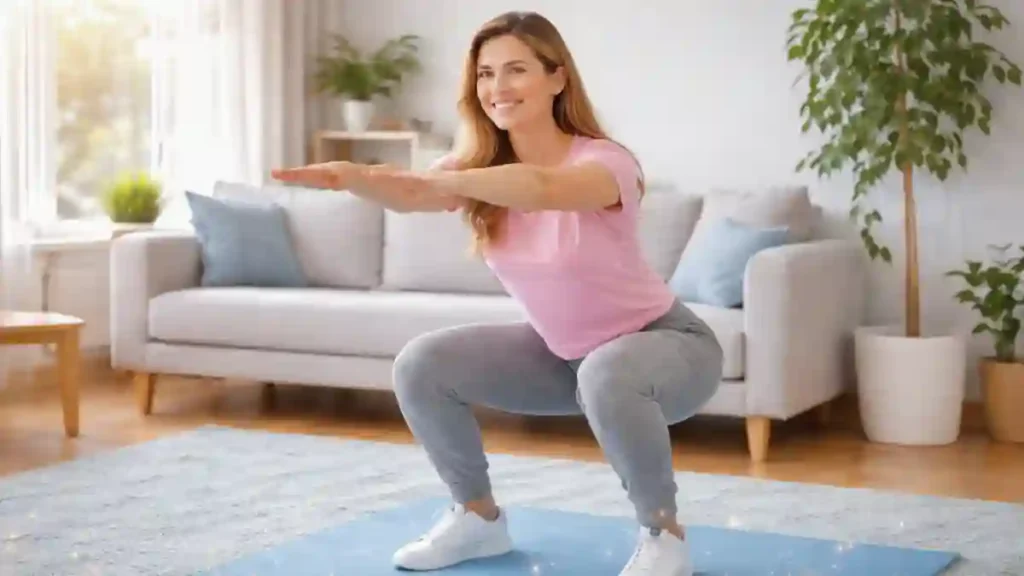
Bodyweight Squats:
- How to do it: Stand with your feet shoulder-width apart, toes pointing slightly out. Hinge at your hips and bend your knees, lowering your body as if sitting into a chair. Keep your chest lifted and back straight. Drive through your heels to return to the starting position.
- Beginner Modification: Use a chair as a guide, lowering until your glutes lightly touch it before standing back up.
- Target: Quads, hamstrings, glutes.
- Duration/Reps: 45 seconds work or 10-15 repetitions.
Reverse Lunges:
- How to do it: Stand tall with feet hip-width apart. Step one foot backward, lowering your hips until both knees are bent at approximately a 90-degree angle. Ensure your front knee is directly over your ankle. Push through your front heel to return to the starting position.
- Target: Quads, hamstrings, glutes, and improves balance.
- Duration/Reps: 45 seconds work or 10-12 repetitions per leg.
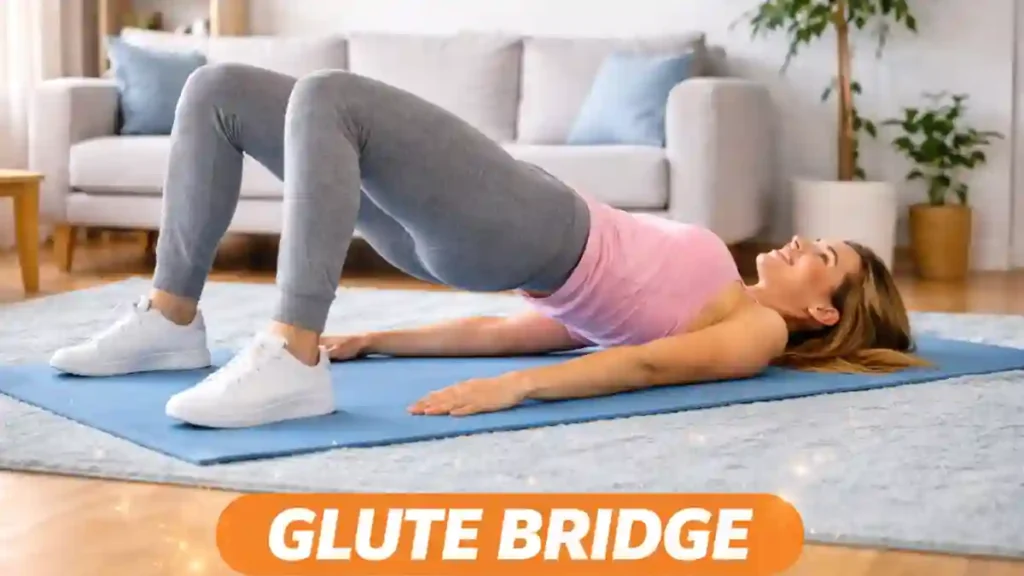
Glute Bridges:
- How to do it: Lie on your back with your knees bent, feet flat on the floor hip-width apart, and arms by your sides. Engage your core and press through your heels to lift your hips off the ground until your body forms a straight line from your knees to your shoulders. Squeeze your glutes at the top. Slowly lower back down.
- Target: Glutes, hamstrings, lower back, core stability.
- Duration/Reps: 45 seconds work or 10-15 repetitions.
Upper Body Strength
These movements will help you build strength in your chest, shoulders, and arms.
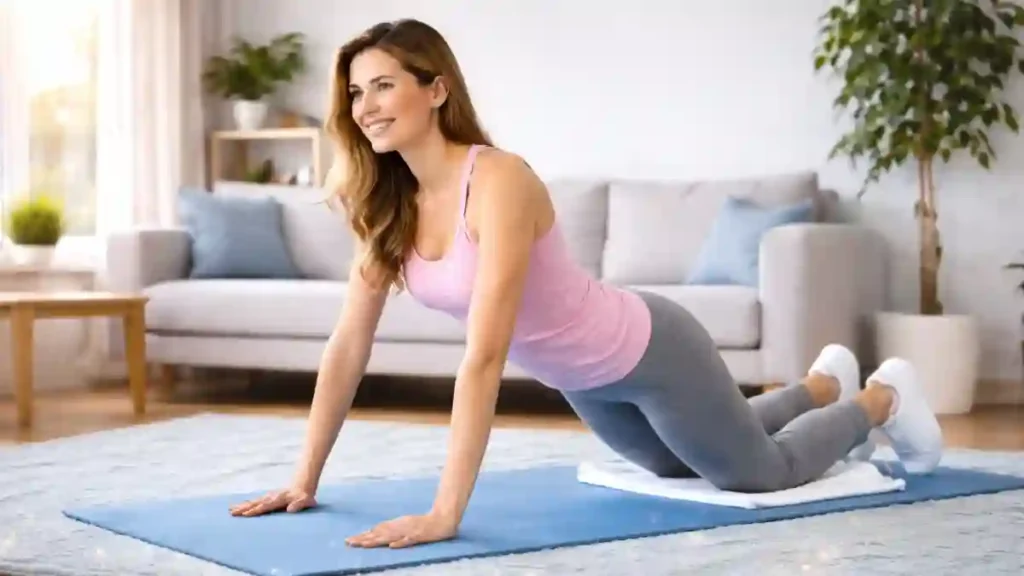
Modified Push-Ups (Knee Push-Ups):
- How to do it: Start on all fours, hands slightly wider than shoulder-width apart. Extend your legs back so your body forms a straight line from head to knees. Lower your chest towards the floor by bending your elbows, keeping them tucked slightly towards your body. Push back up to the starting position.
- Beginner Modification: Start with wall push-ups or elevated push-ups (hands on a counter or sturdy chair) if knee push-ups are too challenging.
- Target: Chest, shoulders, triceps, core.
- Duration/Reps: 45 seconds work or 8-12 repetitions.
Tricep Dips (using a chair):
- How to do it: Sit on the edge of a sturdy chair with your hands gripping the edge next to your hips, fingers pointing forward. Slide your hips off the chair, supporting your weight with your hands and feet. Bend your elbows to lower your body towards the floor until your elbows are at about a 90-degree angle. Push back up to the starting position.
- Target: Triceps, shoulders.
- Duration/Reps: 10-15 repetitions.
Core Strength & Stability
A strong core is essential for overall fitness, posture, and injury prevention.
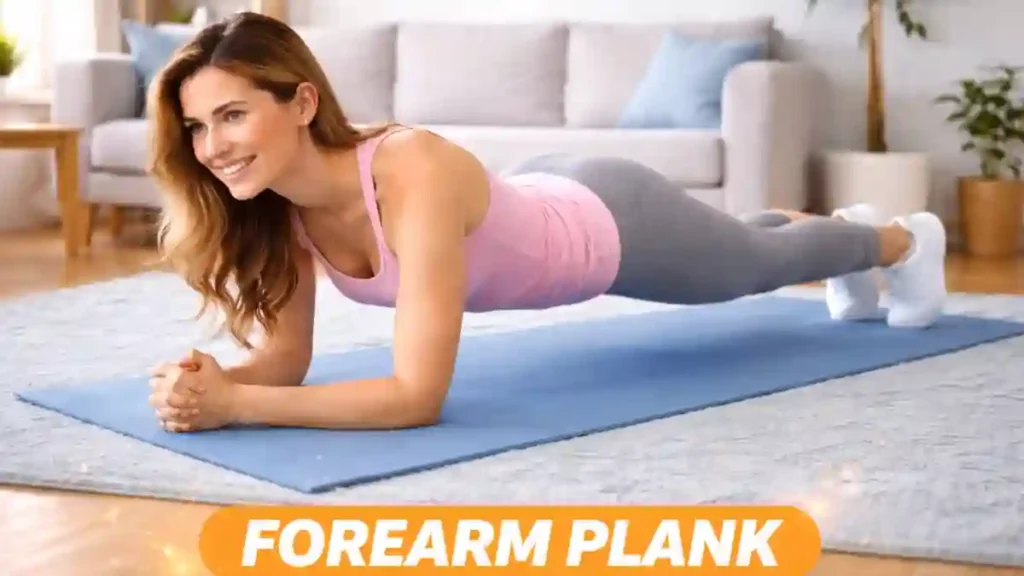
Plank:
- How to do it: Start in a push-up position, then lower onto your forearms, keeping your body in a straight line from head to heels. Engage your core, glutes, and quads. Avoid letting your hips sag or rise too high.
- Beginner Modification: Start on your knees if holding a full plank is too difficult.
- Target: Entire core, including abs, obliques, and lower back.
- Duration/Reps: Hold for 30 seconds.
Mountain Climbers:
- How to do it: Begin in a high plank position with your hands directly under your shoulders. Engage your core and alternate driving your knees toward your chest, mimicking a running motion. Keep your hips stable and avoid bouncing.
- Target: Core, arms, legs, cardiovascular system.
- Duration/Reps: 45 seconds work.
Cool-Down (5 minutes)
After your workout, a cool-down helps bring your heart rate down and improves flexibility. Hold each stretch for 20-30 seconds.
- Quad Stretch: Stand and hold one foot, pulling your heel towards your glute. Repeat on the other side.
- Hamstring Stretch: Sit on the floor with one leg extended, reach for your toes. Repeat on the other side.
- Calf Stretch: Lean against a wall with one foot back, heel down.
- Chest Stretch: Clasp your hands behind your back, and gently lift them.
- Tricep Stretch: Reach one arm overhead, bend the elbow, and gently pull the elbow with the opposite hand.
- Child’s Pose: Kneel on the floor, sit back on your heels, and fold your torso forward, extending your arms.
Common Mistakes Beginners Should Avoid
- Overtraining Too Soon
- Ignoring Proper Form
Nutrition Tips to Support Your Home Workout
- Drink plenty of water and eat a balanced diet.
- Include protein-rich foods like eggs, chicken, beans, and yogurt in your diet.
Conclusion
Starting a home workout routine is not a difficult task. With simple exercises, a clear plan, and consistent effort, you can achieve excellent results without spending a single penny on equipment. The key is to start small, stay consistent, and enjoy the process. Remember, fitness is not a destination; it is a lifestyle
Frequently Asked Questions (FAQ)
Can I really build muscle with only bodyweight exercises?
Yes, absolutely! Bodyweight exercises can effectively build muscle mass, especially for beginners. The key is to apply progressive overload, which means consistently challenging your muscles to get stronger by increasing reps, decreasing rest periods, or performing more difficult variations of exercises
How often should a beginner work out each week?
For most beginners, working out three to four days per week is optimal. This frequency provides enough stimulus for muscle growth and strength improvement while allowing adequate time for recovery. Your muscles actually grow during rest, not during the workout itself.
How long should my home workout be?
If you’re just starting, aim for 10 to 20 minutes per session. This duration is enough to engage your muscles and improve energy without causing burnout. As your strength and endurance increase, you can gradually extend your workout time. Including warm-up and cool-down, a full session might be 20-30 minutes.
What are some common mistakes beginners make with home workouts?
We often see a few recurring mistakes:
Too much too soon: Starting with overly long or intense workouts can lead to burnout or injury. Begin conservatively and build up gradually.
Skipping warm-up and cool-down: These are crucial for preventing injury and aiding recovery. Don’t skip them!
No rest days: Rest days are when your body adapts and gets stronger. Incorporate them into your schedule.
Ignoring form for reps: Five perfect push-ups are more effective than 15 poorly executed ones. Focus on quality over quantity.
Expecting overnight results: Building strength and seeing body composition changes takes time. Strength improvements typically show in 2-3 weeks, while body composition changes can take 6-8 weeks. Be patient and consistent.