How to Get Glowing Skin Naturally in 2026: 10 Science-Backed Tips for Radiant, Healthy Skin
Healthy, glowing skin is something most people want, is more than just a beauty trend. It is a visible sign of good overall health, proper hydration, balanced nutrition, and consistent care. Many people chase quick fixes with heavy makeup or harsh treatments, but true glowing skin comes from addressing the root causes inside and out the body.
In 2026, the focus is shifting toward holistic, science-backed approaches that focus on natural methods, gentle routines, and sustainable habits. Whether you deal with dullness from pollution, stress, or poor sleep, you can achieve natural glowing skin without expensive procedures. This guide shares 10 practical, science-based tips to help you get glowing skin naturally, along with a simple skincare routine, diet advice, and common mistake to avoid.
By the end, you will have a clear plan to build radiant, healthy skin that lasts.
Table of Contents
What Does Glowing Skin Actually Mean?

Glowing skin refers to a complexion that appears hydrated, smooth, even-toned, and vibrant. Scientifically, it results from:
- Strong skin barrier function that retains moisture
- Good collagen and elastin levels for firmness and bounce
- Even melanin distribution with minimal inflammation or redness
- Healthy blood flow that brings oxygen and nutrients to skin cells
It is different from the artificial “glow” created by highlighters or filters. Real radiance shows when your skin is well-nourished, repaired overnight, and protected from daily damage. Factors like dehydration, inflammation, and oxidative stress from free radicals dull the skin, while hydration, antioxidants, and gentle exfoliation restore its natural luminosity.
Common Causes of Dull Skin| Why Your Skin Looks Dull
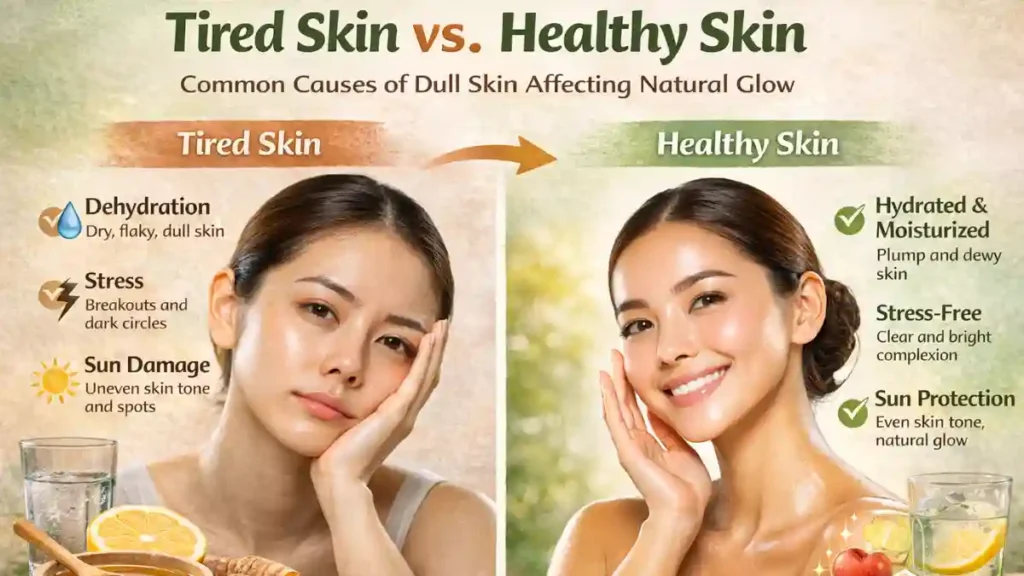
Before fixing the problem, understand why skin loses its glow:
- Dehydration: Depend on both internal (not drinking enough water) and external (dry climates or harsh products) factors
- Poor diet: Due to consumption of low in antioxidants, healthy fats, and vitamins
- Lack of sleep: Skin repairs itself overnight; chronic sleep deprivation reduces collagen and increases inflammation
- Stress: Elevates cortisol production in the body, which breaks down collagen and triggers breakouts or redness
- Environmental factors: Pollution, UV exposure without protection, and smoking accelerate aging and dullness
- Harsh skincare habits: Over-exfoliating or using irritating products that damage the skin barrier
Reversing these through consistent glowing skin tips can deliver noticeable improvements in weeks.
10 Science-Backed Tips to Get Glowing Skin Naturally
Here are ten practical, science-supported strategies that deliver real results when practiced consistently.
- Establish a Consistent Daily Skincare Routine
Simplicity wins. A gentle routine helps your skin type strengthen its barrier and support radiance. Cleanse without stripping, treat with brightening ingredients like vitamin C or niacinamide, moisturize adequately, and always protect with sunscreen.
- Prioritize Internal and External Hydration
While drinking water supports overall health and may improve skin appearance in those who are chronically under-hydrated, topical hydration often makes a more visible difference. Use humectants like hyaluronic acid and occlusive moisturizers to lock in moisture. Aim for balanced fluid intake alongside barrier-supporting products for plump, dewy skin.
- Choose Foods That Support Skin Health
Nutrition directly influences complexion. Incorporating vitamin C-rich fruits (oranges, kiwi, berries, papaya) helps to boost collagen synthesis and fight oxidative stress. Add leafy greens, carrots, and bell peppers for antioxidants. Include sources of healthy fats such as avocados, nuts, seeds, and fatty fish (salmon) for omega-3s that help maintain skin suppleness and reduce inflammation. These dietary choices promote a clearer, more even tone over time.
- Incorporate Gentle Natural Home Remedies
Time-tested options can complement your routine when used mindfully. Fresh aloe vera gel helps to get smooth and hydrated skin. Raw honey offers mild antimicrobial and humectants benefits. A pinch of turmeric mixed with yogurt or honey provides antioxidant and anti-inflammatory effects, but use sparingly to avoid staining and always patch-test. These remedies work best as occasional boosters rather than daily replacements for proven skincare.

- Commit to Quality Sleep
During deep sleep, skin cells regenerate, collagen production ramps up, and inflammation decreases. Aim for 7–9 hours nightly with a consistent schedule. Poor sleep often manifests as dullness, puffiness, or dark circles, while restorative rest contributes to that fresh morning glow.
- Move Your Body Regularly
Exercise enhances blood circulation, delivering oxygen and nutrients to skin cells while helping regulate stress hormones. Even moderate activities like brisk walking, yoga, or dancing can create a natural post-workout radiance and support better sleep.
- Make Sunscreen a Non-Negotiable Daily Step
UV radiation is one of the primary accelerators of dullness, dark spots, and premature aging. Use a broad-spectrum SPF 30+ every morning as the final step in your routine. This single habit protects your glow long-term.
- Exfoliate Thoughtfully, Not Aggressively
Gentle weekly exfoliation helps to remove dead skin cells to reveal fresher layers beneath. Opt for mild chemical exfoliates (such as low-percentage AHAs) over harsh physical scrubs to avoid barrier damage that can worsen dullness.
- Opt for Gentle, Barrier-Friendly Products
Avoid overloading skin with too many actives or harsh ingredients. Choose formulations with calming, hydrating components and introduce new products slowly. A minimalist approach often yields better results than complicated multi-step regimens.
- Manage Stress Effectively
High stress triggers breakouts, redness, and accelerated aging. Incorporate practices like meditation, deep breathing, yoga, or time in nature. Lower cortisol levels help preserve collagen and maintain a calmer, more radiant complexion.

Mistakes to Avoid If You Want Glowing Skin
- Skipping sunscreen or wearing it only on sunny days
- Over-exfoliating or using too many actives at once, which damages the barrier
- Sleeping with makeup on, clogging pores overnight
- Relying solely on topical products while ignoring diet, sleep, and stress
- Copying influencer routines without considering your skin type
These habits often lead to irritation, breakouts, or rebound dullness instead of radiance.
When to See a Dermatologist
If you experience persistent acne, severe dryness, hyper pigmentation, or conditions like eczema that do not improve with lifestyle changes, then consult a dermatologist. They can helps in treatments and rule out underlying issues. As a registered pharmacist, I always recommend professional advice for personalized concerns, especially when using prescription-strength ingredients like retinoids.
Conclusion
Achieving glowing skin in 2026 is simpler than it seems: combine hydration, nutrient-rich foods, a gentle skincare routine for glowing skin, quality sleep, movement, and sun protection. These natural glowing skin strategies are backed by science and deliver sustainable results without harsh chemicals.
Your glowing skin journey begins with one mindful choice. Which tip will you try first?
FAQ
What foods give you glowing skin?
Berries, citrus fruits, fatty fish, avocados, nuts, and leafy greens are top choices due to their vitamins, antioxidants, and healthy fats.
How long does it take to see results for glowing skin?
Most people notice improvements in hydration and brightness within 2–4 weeks, with fuller radiance after 8–12 weeks of consistent habits.
Can home remedies replace a skincare routine?
They can support it (e.g., aloe for soothing), but a basic routine with cleansing, moisturizing, and SPF provides the foundation for lasting results.
Is glowing skin only for certain skin types?
No, every skin type, like dry skin, oily skin, combination, or sensitive skin, can achieve natural radiance with the right balanced approach.
Disclaimer: This article is for informational purposes only and does not replace professional medical advice. Consult your healthcare provider or dermatologist for personalized recommendations.